
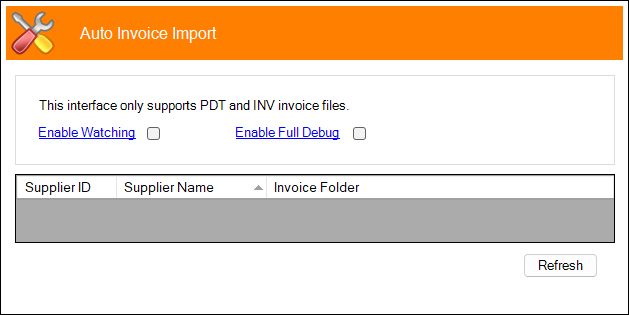
This outlines the information and the steps that are needed to familiarise oneself with the Auto Invoice Import in Swiftpos.
IMPORTANT
For this feature to function as expected, a FTP site must be configured in order for invoices to be automatically imported from.
Subjects ▲ ▼
About ▲ ▼
What Is Supported? ▲ ▼
- Only PDT and INV invoice files are supported.
How To? ▲ ▼
How To GET STARTED? ▲ ▼
- In Back Office:
- In Global Preferences:
- In the Batch Reports/Service Email Setup tab, ensure:
- In the Email Server Account Settings section, ensure the email server credentials are configured and tested. This is needed to ensure alert notifications can be sent when an invoice cannot be imported.
- In the Service Alert Account Settings section, ensure the email credentials and alerts are configured. This is needed to ensure alerts are triggered and notifications can be sent when an invoice cannot be imported. Specifically, the Errors, Failure Audits and Warnings alert options.
- In the Batch Reports/Service Email Setup tab, ensure:
- In Suppliers Records:
- In the grid section, locate and select the Supplier for which invoices are to be imported automatically.
- Select the Edit option in the footer to open the Supplier Edit screen.
- In the Order Send tab, ensure:
- The FTP credentials are configured. Specifically, the Invoice Folder field must contain a value.
- In Global Preferences:
- Access the Options And Settings screen and select the Auto Invoice Import option from the Interfaces menu, to open the Auto Invoice Import screen.
- Confirm the Suppliers listed in the grid section are those Suppliers for which invoices are to be imported.
- Ensure the Service Monitor service is started and is running.
Screens ▲ ▼
Auto Invoice Import Screen ▲ ▼
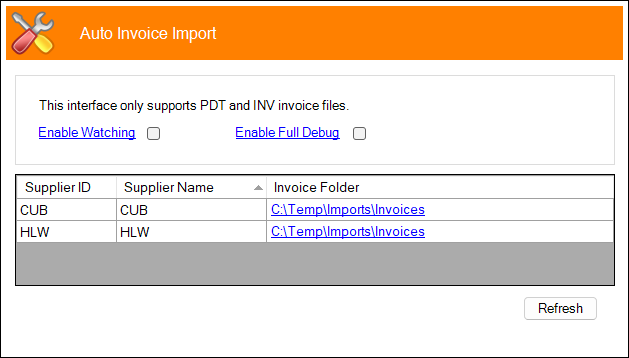
To access refer to How To Access The Service Monitor for more information. Used to view those Suppliers that have been configured configured with FTP credentials, thus ensuring they the settings required for the Auto Invoice Import in Swiftpos.
Header Section
-
Enable Watching - Select to enable the Service Monitor to watch for activity.
-
Enable Full Debug - Select to enable. Only enable when recommended.
Grid Section
Lists the Suppliers and their Invoice Folder that are configured for the automatic importing of invoices.
Notes ...
The value displayed in the Invoice Folder column is configured HERE when the FTP option is selected in the Method drop-down list.
End of article ▲